
• Articles
    • ‘How-To’ Wildlife Guides
    • Four Animal Facts
  • Blog
  • Contact
  • Gallery
    • Photo of the Week
    • Video
  • Homepage
  • Map
  • Reviews
    • Wildlife Tours
    • Lodging Reviews
  • Shop
  • Sign up
  • Sitemap
  • About
    • Who We Are
    • Hire Us / Advertise
  • Destinations
    • Eastern Africa
      • Mozambique Wildlife Travel Guide
    • Europe
      • Ireland Wildlife Travel Guide
    • North America
      • Canada Wildlife Travel Guide
      • United States Wildlife Travel Guide
    • South America
      • Argentina Wildlife Travel Guide
    • Southern Africa
      • Botswana Wildlife Travel Guide
      • Namibia Wildlife Travel Guide
      • South Africa Wildlife Travel Guide
  • Archive
  • Facebook
  • Google
  • Twitter
  • Youtube
  • Home
  • About
    • Who We Are
    • Hire Us / Advertise
  • Destinations
    • North America
      • United States
      • Canada
    • South America
      • Argentina
    • Europe
      • Ireland
    • Southern Africa
      • Botswana
      • Namibia
      • South Africa
    • Eastern Africa
      • Mozambique
  • Video
  • Articles
    • ‘How-To’ Wildlife Guides
    • Four Animal Facts
    • Photo of the Week
  • Reviews
    • Lodging Reviews
    • Wildlife Tours
  • Blog
  • Contact
  • Shop
Home» Four Facts » Four Animal Facts: The Leopard Seal

Four Animal Facts: The Leopard Seal

June 4, 2012 | by Cristina Garcia | Four Facts | No Comments
Leopard seal resting on ice


Scientific name: Hydrurga leptonyx

1) Fierce as a leopard

Leopard seals are named after their spotty coats and for their reputation of being fearsome hunters. It is one of the top predators in Antarctic waters, filling the niche that polar bears hold in the Arctic.
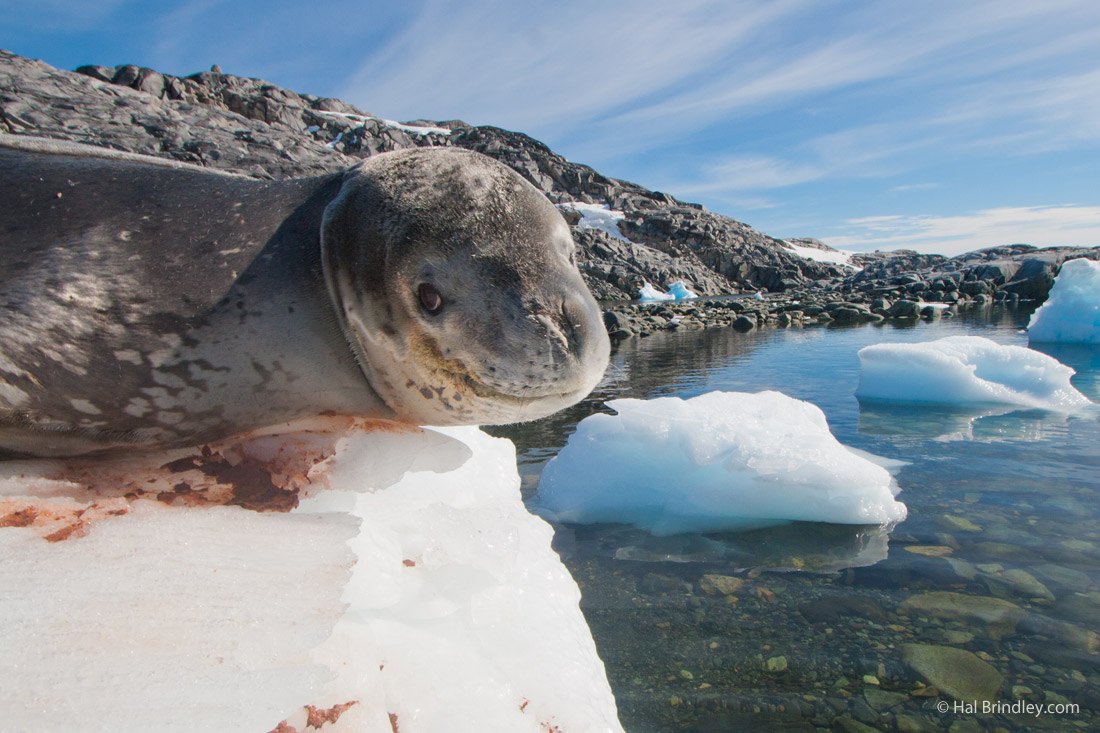
Leopard seals have a spotted coat

Leopard seals have a spotted coat

2) Predator and prey

It is the only pinniped that feeds extensively upon warm-blooded animals. They, in turn, are sometimes preyed upon by orcas (killer whales), another warm-blooded animal.
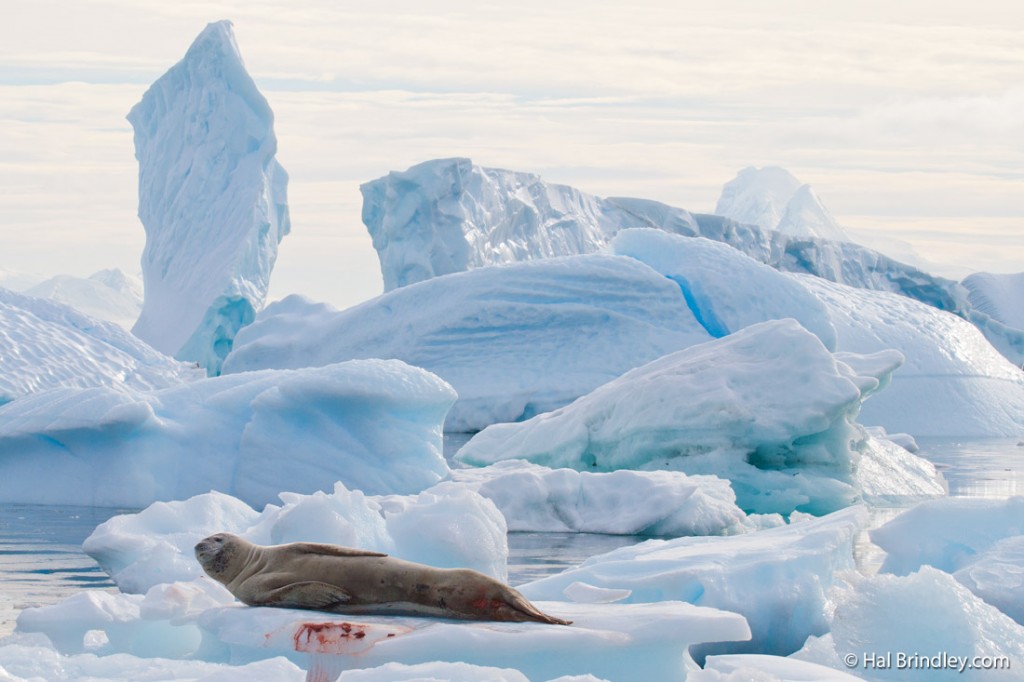
3) The unique dentition of a leopard seal

The unique dentition of the leopard seal allows them to have a surprisingly varied diet.

Their front canines and incisors are designed to capture and tear prey like other seals (crabeater seals and Antarctic fur seal pups), seabirds, and penguins (mostly Adélie penguins). Their back molars present interlocking cusps to strain krill (a shrimp-like crustacean) out of seawater. Although leopard seals are powerful predators, tiny krill actually make up the majority of their diet.
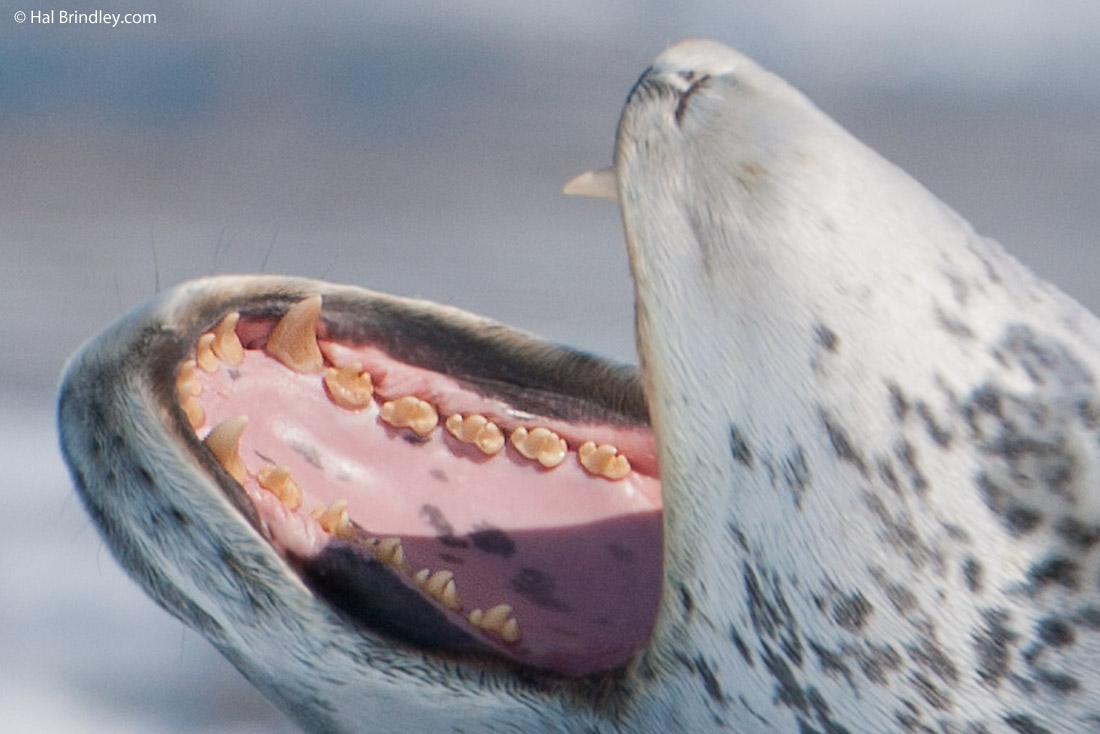
Dentition of a leopard seal

Dentition of a leopard seal

Other food items include cephalopods, fish and squid and they are known to scavenge upon dead whales and other seals.

4) Graceful swimmers

Unlike other “true” seals (the phocid family) that swim by moving their hind limbs from side to side, leopard seals swim gracefully using powerful, long, and simultaneous strokes of the forelimbs in a manner similar to the “eared” seals (otariids) like sea lions.
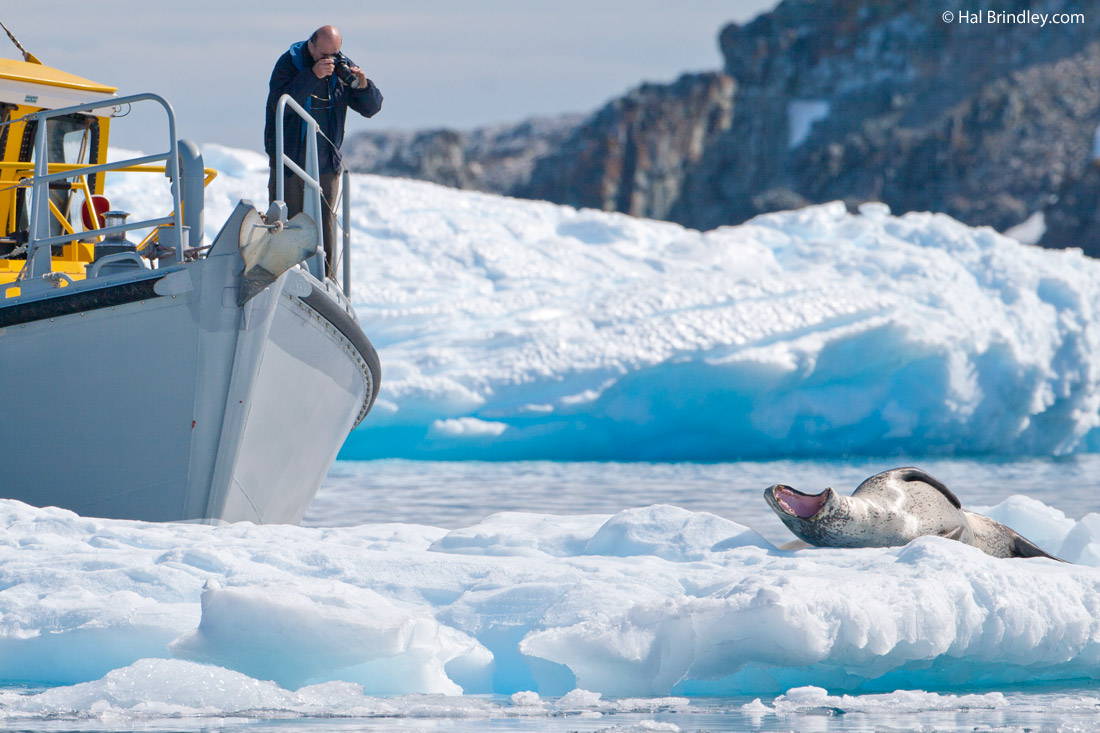

Viewing leopard seals on Antarctica

Viewing leopard seals in Antarctica


If you enjoyed our four leopard seal facts you may also like:

FOUR FACTS: Walrus

FOUR FACTS: Manatees

Cristina Garcia

Zoologist and amateur wildlife photographer. She has worked in the field with jackals, wolves, cheetahs & leopards. Due to her habit of dissecting every poo she finds on the trail, her friends refer to her as a poo-logist. Her travel memoir Dual Nature about traveling around Africa with a stranger will be published in 2013.

Facebook Twitter Google+ YouTube 

Digg Digg
antarctica, leopard seal, penguin

Leave a Reply Cancel reply

Your email address will not be published. Required fields are marked *

You may use these HTML tags and attributes: <a href="" title=""> <abbr title=""> <acronym title=""> <b> <blockquote cite=""> <cite> <code> <del datetime=""> <em> <i> <q cite=""> <strike> <strong>

CommentLuv badgeShow more posts

Newsletter sign up

  • Photo funnies
  • Wildlife destination of the month

Recent Posts

  • costarica-web-thumb2

    Wildlife Roadtrip Costa Rica, Two Days in the Osa Peninsula (Video)

    May 22, 2013
  • Walking with polar bears

    How to See Polar Bears and Beluga Whales on the Same Trip to Churchill, Manitoba

    May 17, 2013
  • Red-eyed tree frog, Costa Rica

    Red-eyed Tree Frog, Osa Peninsula, Costa Rica

    May 15, 2013

    Travel For Wildlife Prints for Sale

    Sell Art Online

    visit web store now...

    Latest Tweet

    • Costa Rica Becomes First Latin American Country to Ban Hunting for Sport http://t.co/vudSqZuzlS #CostaRica

    Contact Us

    • TravelForWildlife@gmail.com
    • Contact Us
      • Facebook
      • Twitter
      • Youtube
      • Rss
      • Google
    • Archive
    • Sitemap
    • Who We Are
    • Hire Us / Advertise
    • Map

    (c) 2013 travel4wildlife.com - Web Design by Travel4Wildlife