• Articles
    • ‘How-To’ Wildlife Guides
    • Four Animal Facts
  • Blog
  • Contact
  • Gallery
    • Photo of the Week
    • Video
  • Homepage
  • Map
  • Reviews
    • Wildlife Tours
    • Lodging Reviews
  • Shop
  • Sign up
  • Sitemap
  • About
    • Who We Are
    • Hire Us / Advertise
  • Destinations
    • Eastern Africa
      • Mozambique Wildlife Travel Guide
    • Europe
      • Ireland Wildlife Travel Guide
    • North America
      • Canada Wildlife Travel Guide
      • United States Wildlife Travel Guide
    • South America
      • Argentina Wildlife Travel Guide
    • Southern Africa
      • Botswana Wildlife Travel Guide
      • Namibia Wildlife Travel Guide
      • South Africa Wildlife Travel Guide
  • Archive
  • Facebook
  • Google
  • Twitter
  • Youtube
  • Home
  • About
    • Who We Are
    • Hire Us / Advertise
  • Destinations
    • North America
      • United States
      • Canada
    • South America
      • Argentina
    • Europe
      • Ireland
    • Southern Africa
      • Botswana
      • Namibia
      • South Africa
    • Eastern Africa
      • Mozambique
  • Video
  • Articles
    • ‘How-To’ Wildlife Guides
    • Four Animal Facts
    • Photo of the Week
  • Reviews
    • Lodging Reviews
    • Wildlife Tours
  • Blog
  • Contact
  • Shop

A Dazzle of Zebras: A Striped Photo Gallery

February 12, 2013 | by Cristina Garcia | Blog | 10 Comments

Did you know that a group of zebras is called a dazzle?

While zebras may be numerous on the African plains, we never tire of watching them. Their beautifully-decorated bodies, combined with their fascinating and entertaining behaviors, make them a truly endearing creature.

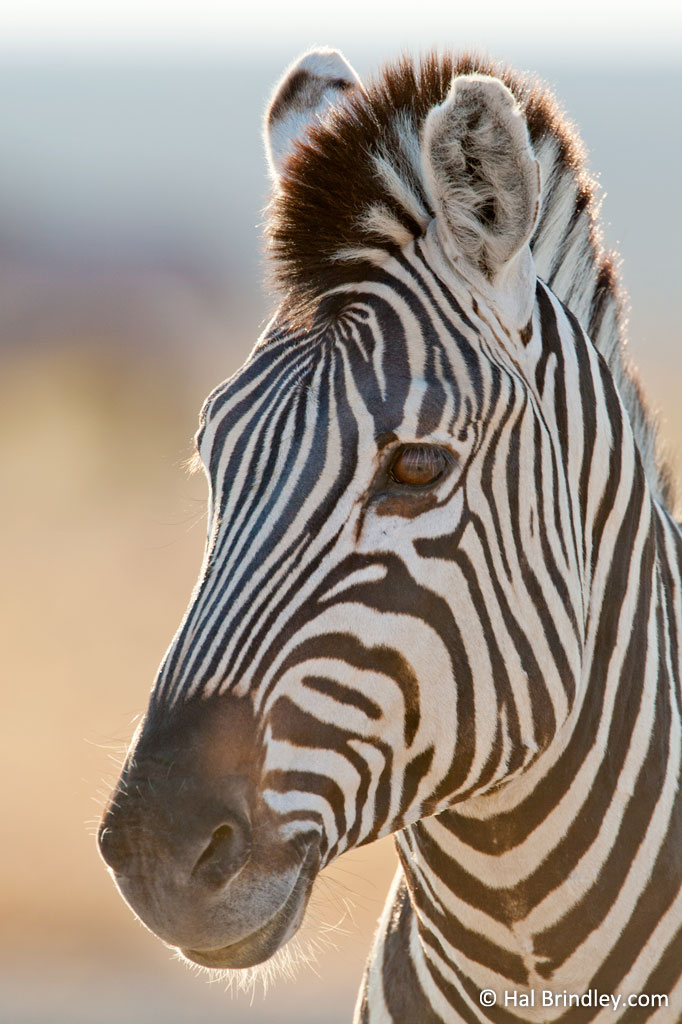
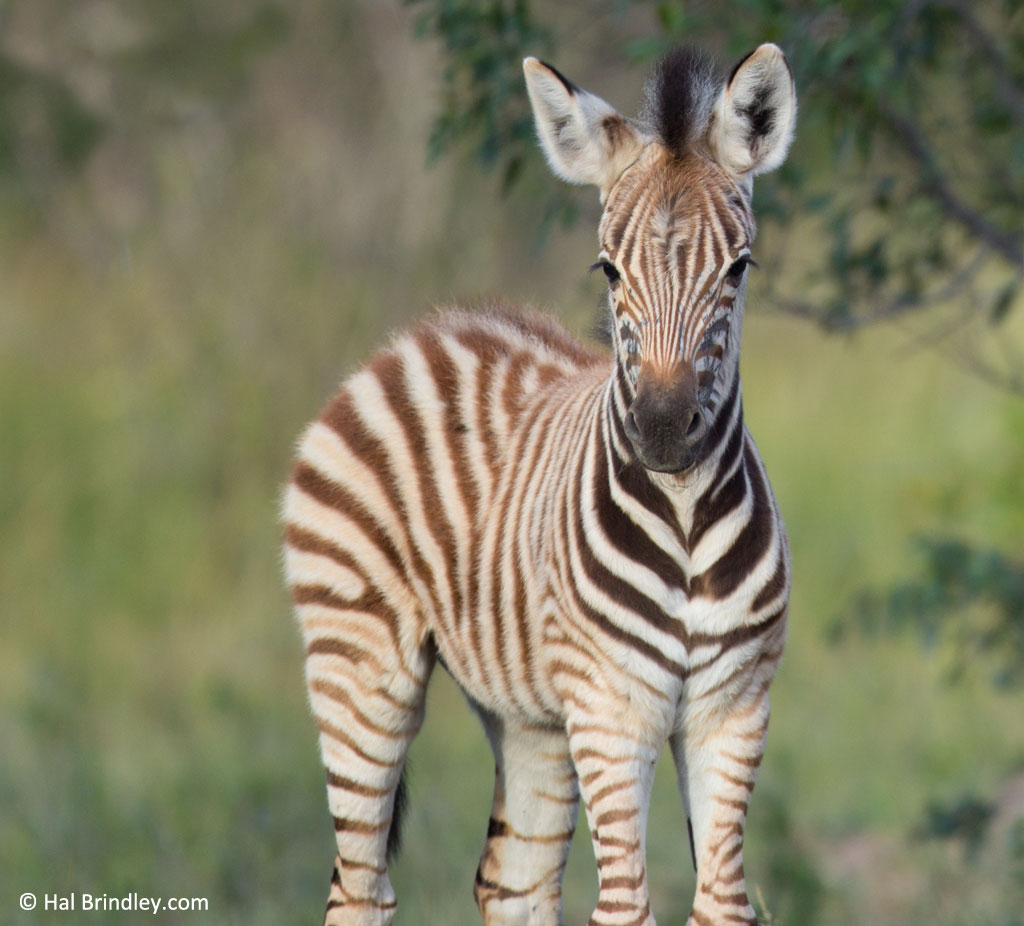
There are only six surviving horse species in the world and three of them are zebras. The Burchell’s Zebra (shown here) is the most common and can be found throughout Southern and Eastern Africa. Compared with other species, the Burchell’s has rather broad stripes, but the color of those stripes can vary quite a bit depending on their location. In Southern Africa for example, individuals exhibit shadow stripes between the large black stripes on their torso, and you can see that effect in the zebras in this gallery. Baby zebras are much fuzzier and have a reddish-brown hue in their stripes. And, of course, the stripe pattern on every zebra is unique, just like your finger print.

This Burchell’s zebra photo gallery includes pictures taken during various seasons in Kruger National Park, South Africa and in Etosha National Park, Namibia. We hope you enjoy this dazzling dazzle of zebras. (All photos by Cristina Garcia and Hal Brindley.)
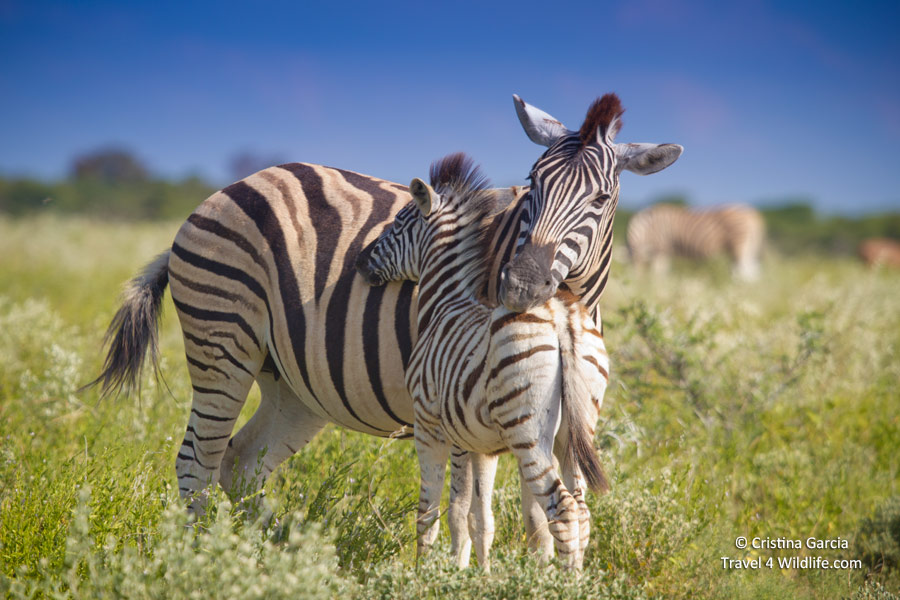
 

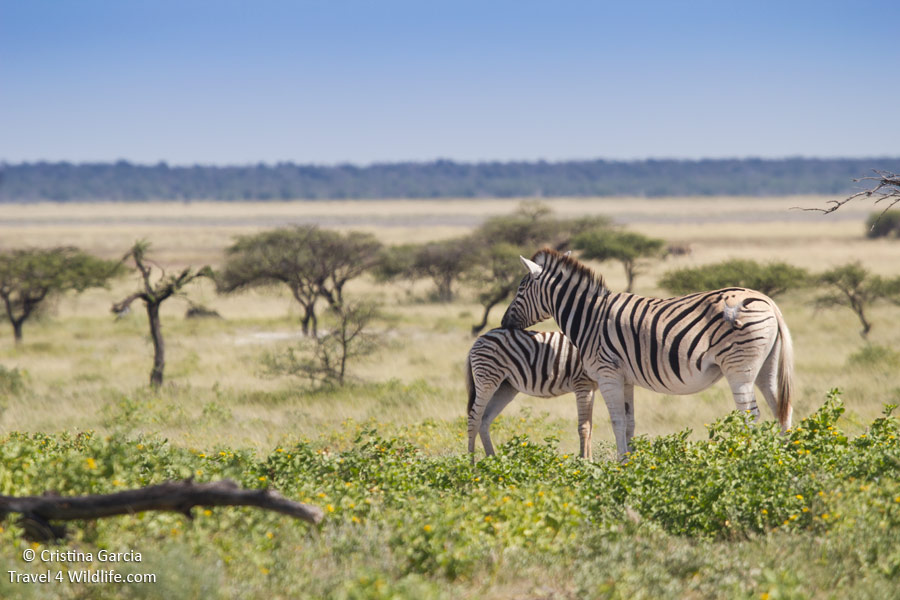
Mutual head-resting strengthens  the bond between a zebra and her foal.

Mutual head-resting strengthens the bond between a zebra and her foal.


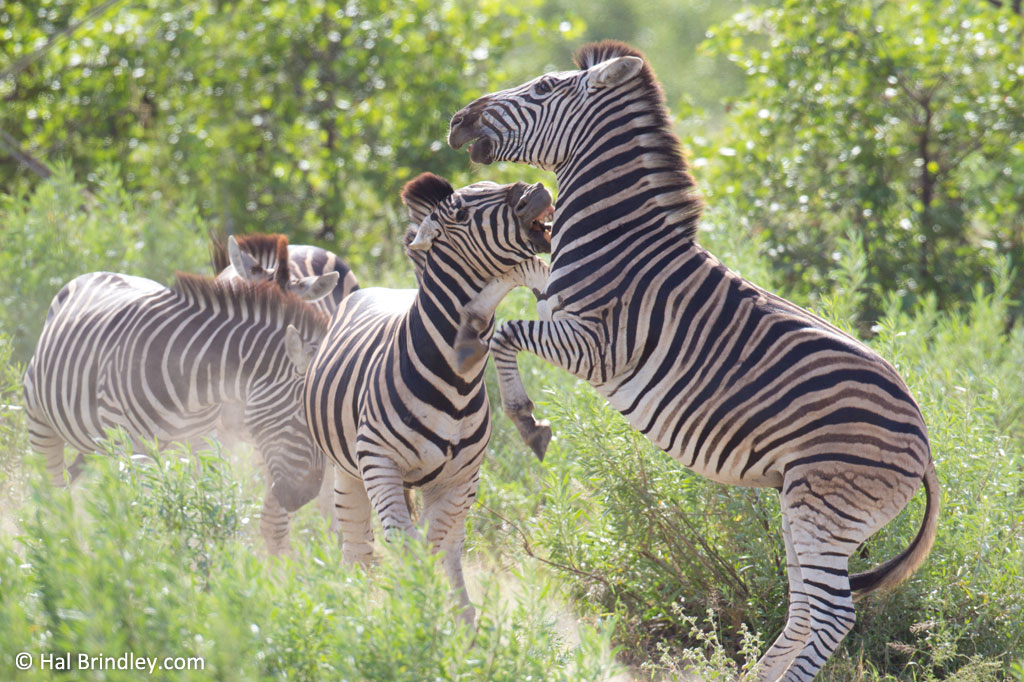
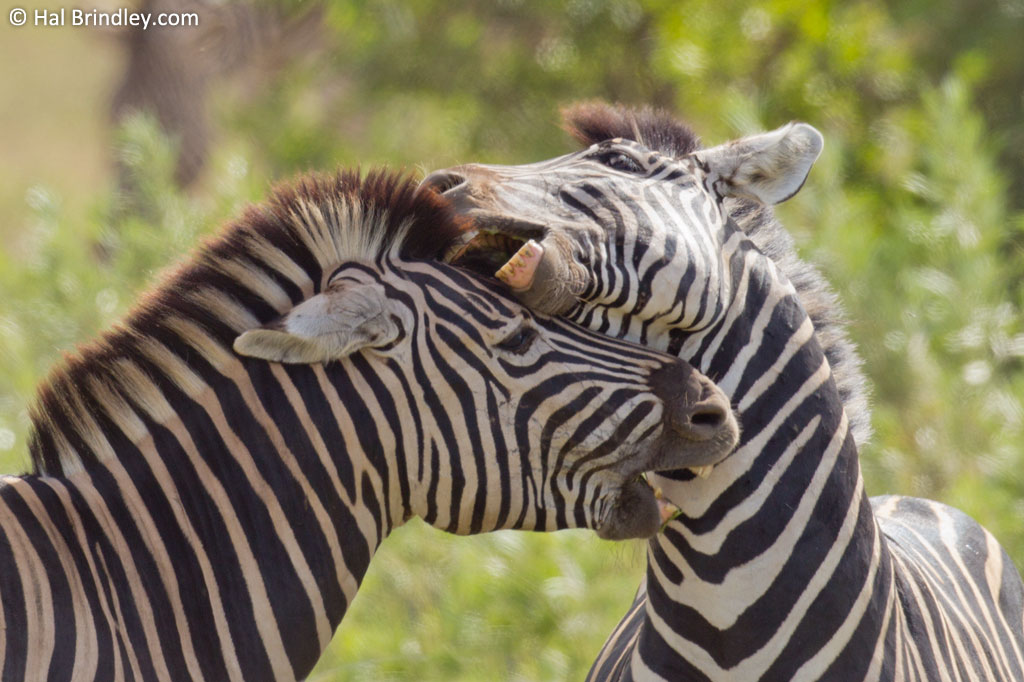
    Zebra stallions will aggressively bite their opponent's head and neck during a quarrel.

Zebra stallions will aggressively bite their opponent’s head and neck during a quarrel.


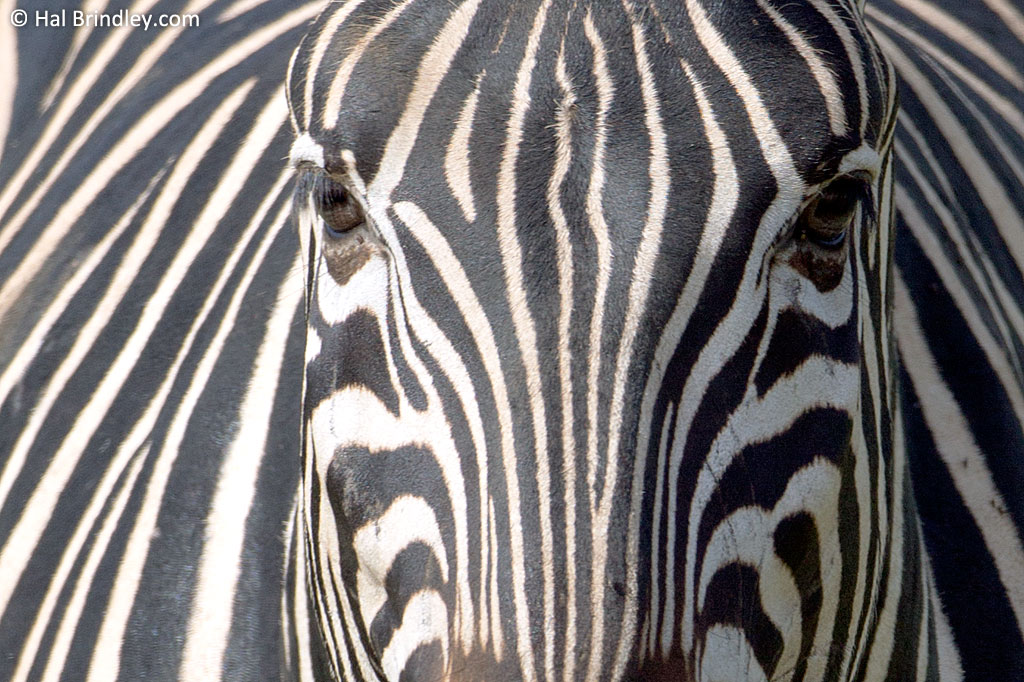
The tattooed horse.

The tattooed horse.


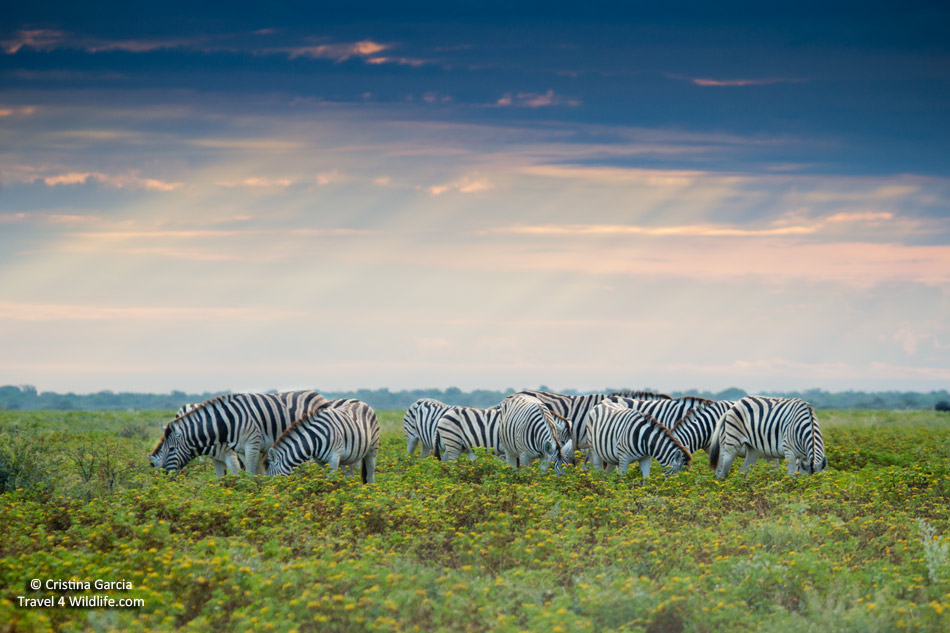
A dazzle of zebras graze on a stormy evening in Etosha, Namibia

A dazzle of zebras grazing on a stormy evening in Etosha, Namibia


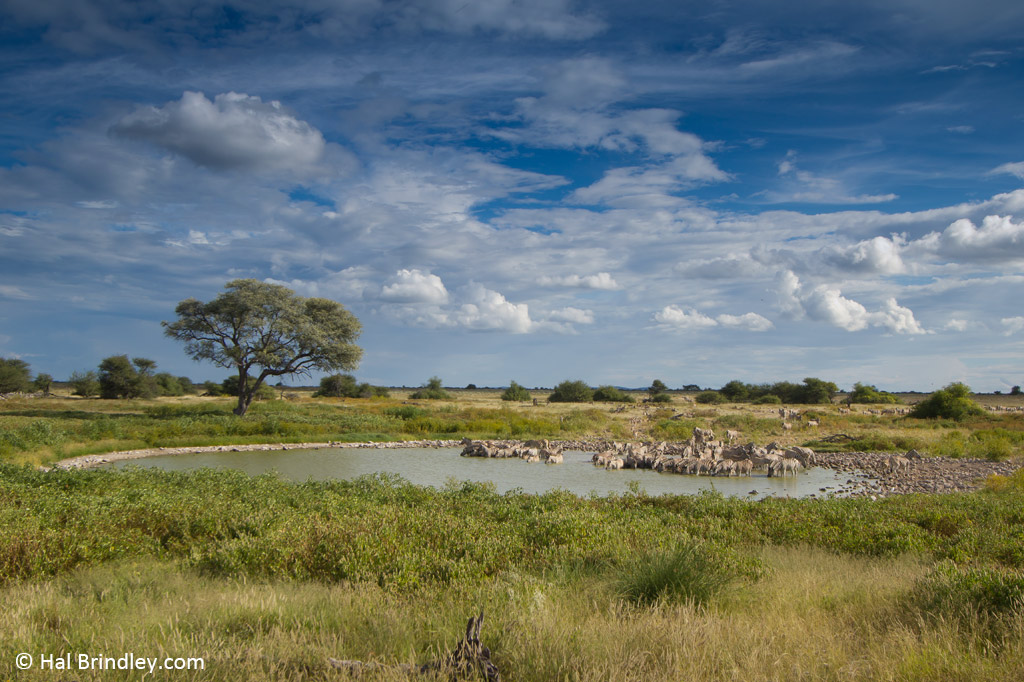
A constant parade of zebras visit the Okaukuejo waterhole in Etosha.

A constant parade of zebras visit the Okaukuejo waterhole in Etosha.


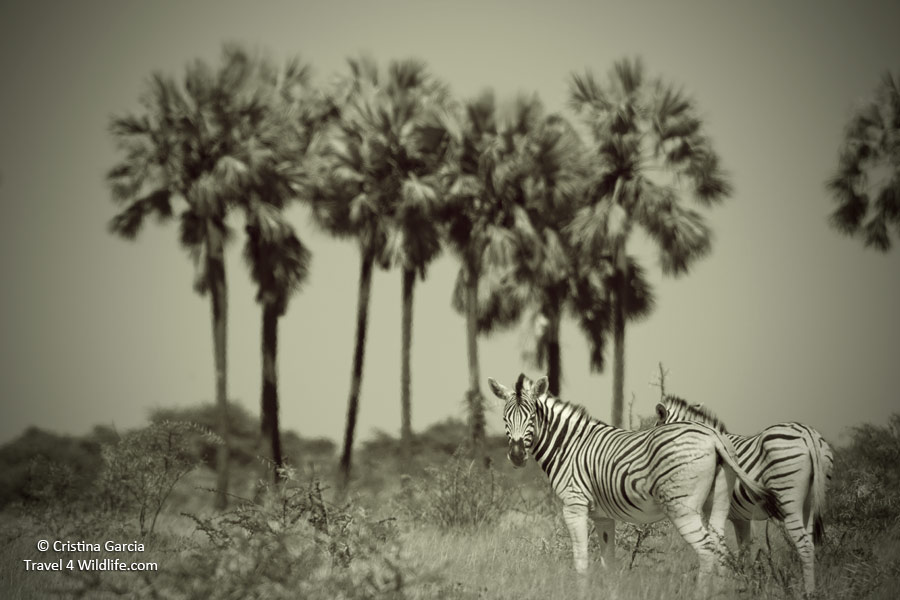
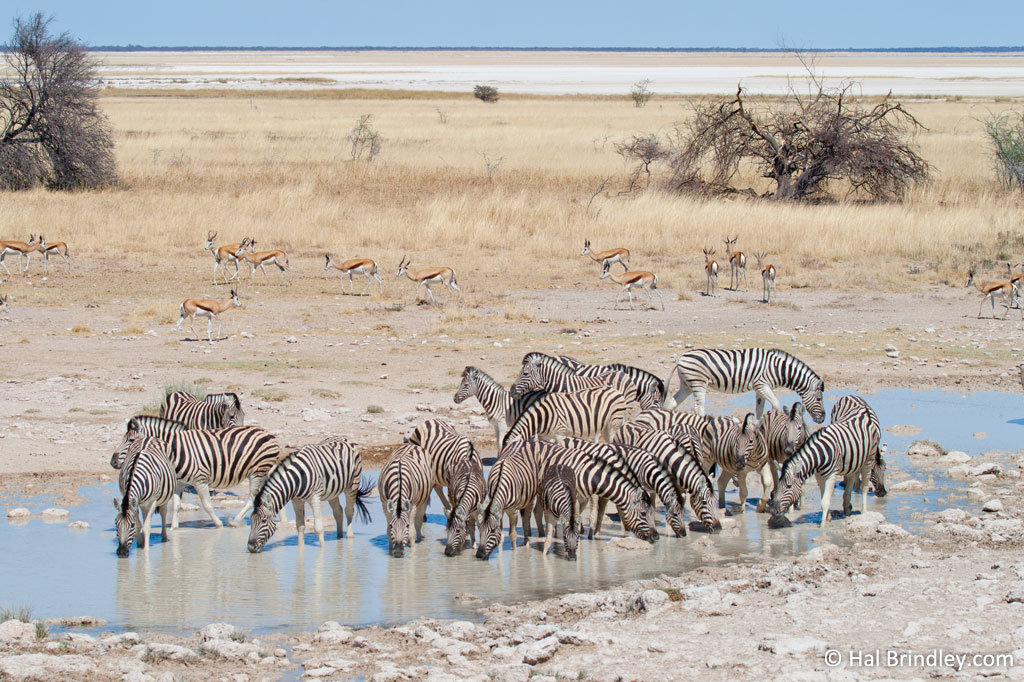
Zebras make a stop at Twee Palms waterhole in Etosha, Namibia

Zebras make a stop at Twee Palms waterhole in Etosha, Namibia


When the sun sets, it's time to stay alert for lions.

When the sun sets, it’s time to stay alert for lions.


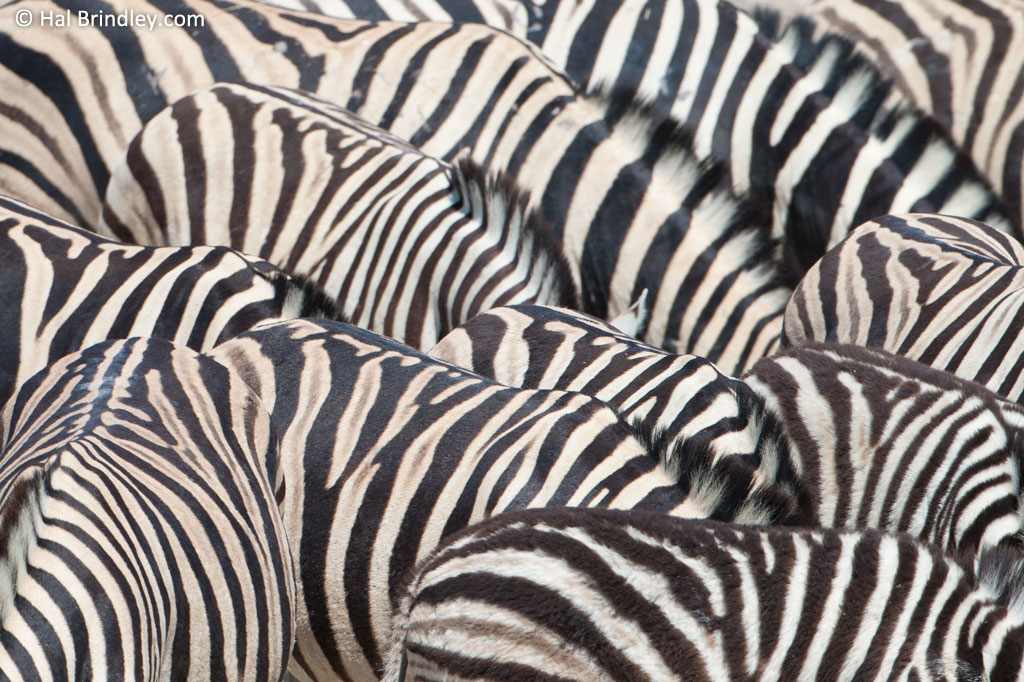
Stripe patterns may make it difficult for predators to single out an individual from a group. Notice the shadow stripes on these zebras in Namibia.

Stripe patterns may make it difficult for predators to single out an individual from a group. Notice the shadow stripes on these zebras in Namibia.


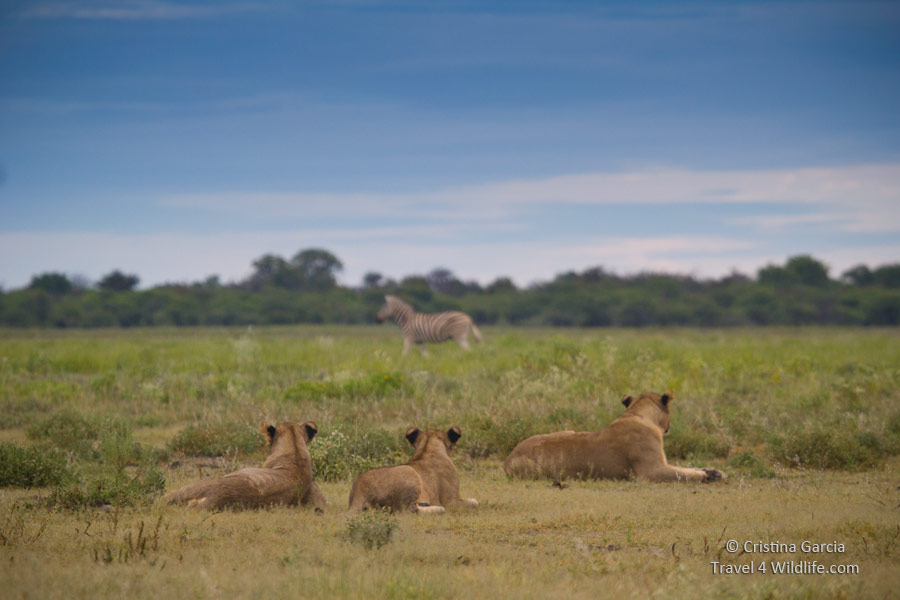
Lions don't generally hunt during the day but this zebra still maintains a wide berth.

Lions don’t generally hunt during the day but this zebra still maintains a wide berth.


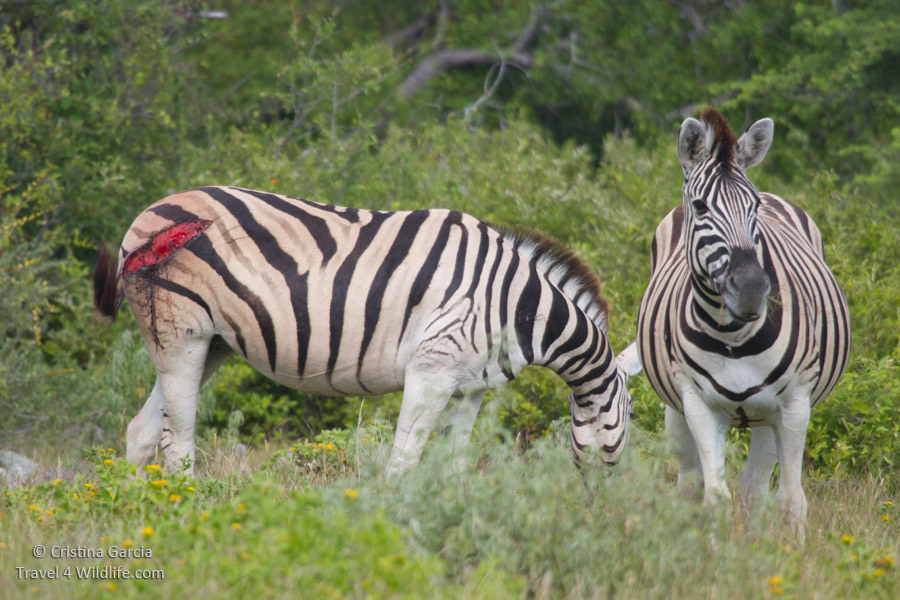
Not all lion attacks are successful. Claw marks are clearly visible on this survivor's back side.

Not all lion attacks are successful. Claw marks are clearly visible on this survivor’s back side.


This mother survived an attack (as evidenced by her healed scars) and lived on to raise a foal.

This mother survived an attack (as evidenced by her healed scars) and lived on to raise a foal.


    We usually call baby zebras "fuzzy butts" because of the soft furry hair that stands tall on their rear ends.

We usually call baby zebras “fuzzy butts” because of the soft furry hair that stands tall on their rear ends.


When a fight gets especially serious between two stallions, the biting escalates to kicking.

When a fight gets especially serious between two stallions, the biting escalates to kicking.


A row of drinking zebras is truly one of the most dazzling sights in the African savannah.

A row of drinking zebras is truly one of the most dazzling sights in the African savannah.


That's all folks!

That’s all folks!


Which photo is your favorite?

 Other Photo Galleries


  MANATEES!
Manatee close-up

Sometimes manatees get so close!

 
WILDLIFE BABIES: A MOTHER'S DAY PHOTO GALLERY
Lion cub and mother. Kruger National Park, South Africa.

Lion cub and mother. Kruger National Park


Visit Our Print Store!


Cristina Garcia

Zoologist and amateur wildlife photographer. She has worked in the field with jackals, wolves, cheetahs & leopards. Due to her habit of dissecting every poo she finds on the trail, her friends refer to her as a poo-logist. Her travel memoir Dual Nature about traveling around Africa with a stranger will be published in 2013.

Facebook Twitter Google+ YouTube 

Digg Digg
blogs, Namibia, photo gallery, south_africa

10 comments on “A Dazzle of Zebras: A Striped Photo Gallery”

  1. Barbara Weibel says:
    February 15, 2013 at 10:08 am

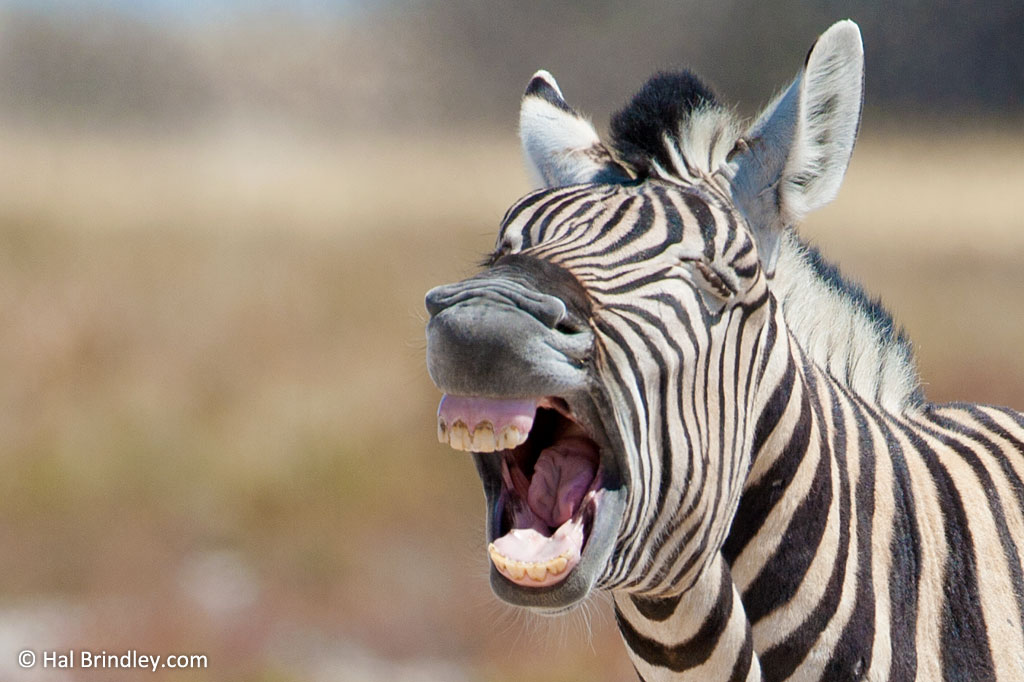
    All these photos are amazing, but I think I like the last one the best. I can’t decide if the zebra is laughing or not!
    Barbara Weibel recently posted..PHOTO: A Gorgeous Night on La Rambla, the Main Plaza in the Old Town of Figueres, SpainMy Profile

    Reply
    • Cristina Garcia says:
      February 15, 2013 at 11:06 am

      Thanks! We think it was yawning but we can’ really remember. Looks pretty funny whatever it is doing.

      Reply
  2. Mary @ Green Global Travel says:
    February 20, 2013 at 12:02 pm

    Wow, amazing photos! I love the closeup of the zebra looking straight into the camera. It’s not an angle you see very often and it makes their markings all that more pronounced.
    Mary @ Green Global Travel recently posted..INTERVIEW: Bully Director Lee Hirsch on His Controversial Anti Bullying ProjectMy Profile

    Reply
    • Cristina Garcia says:
      February 21, 2013 at 4:38 pm

      Hi Mary!
      I think that is my favorite! I find it powerful and intimate at the same time.

      Reply
  3. Jordi C. says:
    February 25, 2013 at 5:22 pm

    Cristina,

    Incredible pictures as it is now customary from Travel4Wildlife. I specially love the close up picture. In Shamwari we had the opportunity to see some mean fighting between stallions, aiming for head and neck as you mention and also testicles. Our guide told us that they try to fight off competition by neutering the opponent. I wonder if any other animals use this tactic.

    Once again, congratulations for a breathtaking gallery.

    Jordi

    Reply
    • Cristina Garcia says:
      February 25, 2013 at 5:32 pm

      Awww thanks Jordi! Aiming for testicles!!?? wow, never heard of that!

      Reply
      • Jordi C. says:
        February 25, 2013 at 6:06 pm

        The quality of the picture is nowhere near your wildlife photos, but here you have two stallions viciously going at it. You need to through in some imagination but that’s what it was going on: Testy hunting.

        Reply
        • Cristina Garcia says:
          February 25, 2013 at 6:10 pm

          Testy hunting? That must hurt!

          Reply
  4. Lucy | gapyeardotcom says:
    May 21, 2013 at 8:43 am

    Amazing quality photos – I never knew a group of Zebras was called a Dazzle! You learn something new every day.

    Would love to jet off to Southern Africa right now to see them close up in real life.

    Reply
    • Cristina Garcia says:
      May 21, 2013 at 9:13 am

      Thanks Lucy! Do it! Southern Africa is amazing.

      Reply

Leave a Reply Cancel reply

Your email address will not be published. Required fields are marked *

You may use these HTML tags and attributes: <a href="" title=""> <abbr title=""> <acronym title=""> <b> <blockquote cite=""> <cite> <code> <del datetime=""> <em> <i> <q cite=""> <strike> <strong>

CommentLuv badgeShow more posts

Latest Tweet

  • Costa Rica Becomes First Latin American Country to Ban Hunting for Sport http://t.co/vudSqZuzlS #CostaRica

Contact Us

  • TravelForWildlife@gmail.com
  • Contact Us
    • Facebook
    • Twitter
    • Youtube
    • Rss
    • Google
  • Archive
  • Sitemap
  • Who We Are
  • Hire Us / Advertise
  • Map

(c) 2013 travel4wildlife.com - Web Design by Travel4Wildlife